
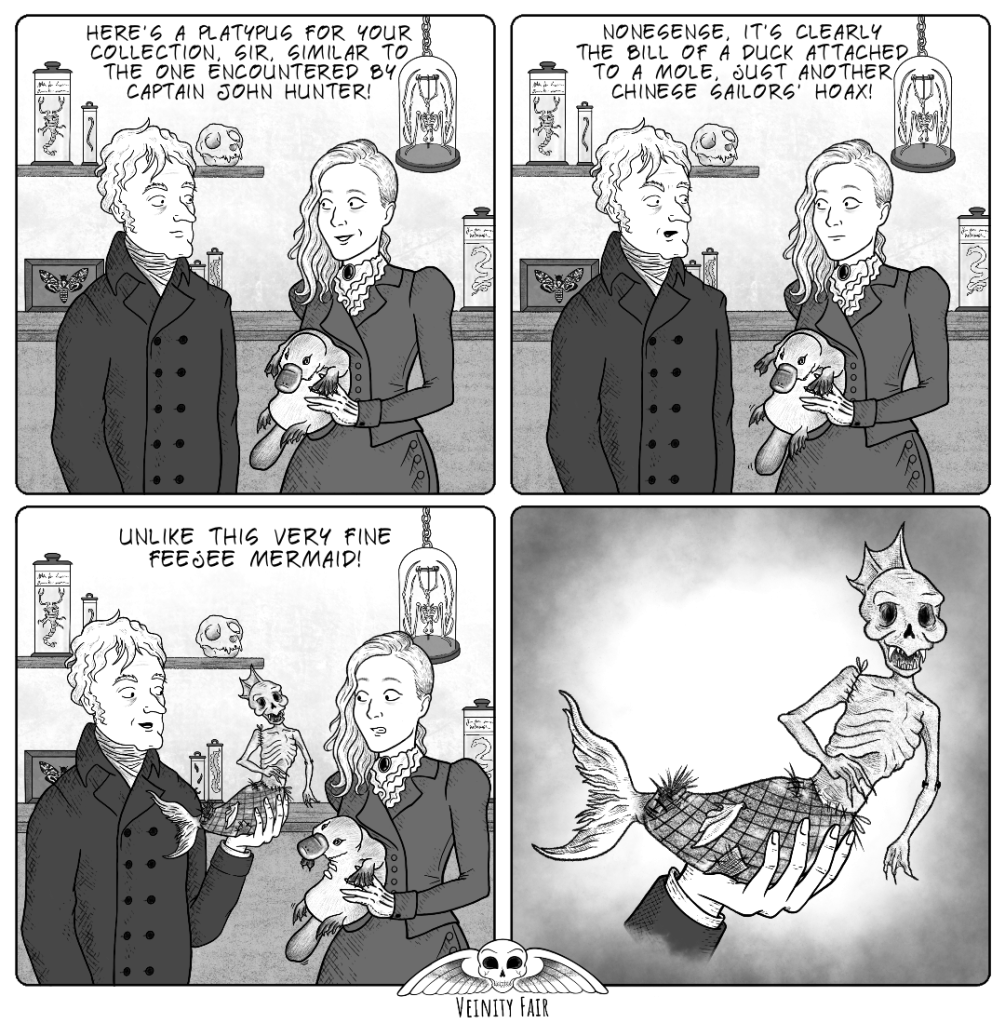
The platypus was a real mystery to the first Europeans who encountered this graceful creature, some even doubted its existence! When Captain John Hunter sent a pelt of the animal to the naturalist George Shaw in 1799, the scientific community was baffled. Shaw named the animal Platypus anatinus, a flatfoot duck, but also expressed his doubts about the authenticity of the bizarre creature, saying that “there might have been practised some arts of deception in its structure.” Other naturalists were equally suspicious that the beast was just a hoax. This was linked to the popularity of fake specimens, such as Feejee mermaids, shown at sideshows.
As the infamous anatomist Robert Knox* explained: “Aware of the monstrous impostures which the artful Chinese had so frequently practised on European adventurers, the scientific felt inclined to class this rare production of nature with eastern mermaids and other works of art.” Knox also had a chance to perform a thorough dissection of a platypus and published a series of articles about its anatomy.
Big thanks to @skull.slinger (IG) for becoming a star adventurer for VF! Together, we’ll bring more stories about real and mythical beasts of the past.
*Yes, that’s the same Robert Knox who bought bodies from Burke and Hare. Expect a lot of stories surrounding resurrectionists this year as well!
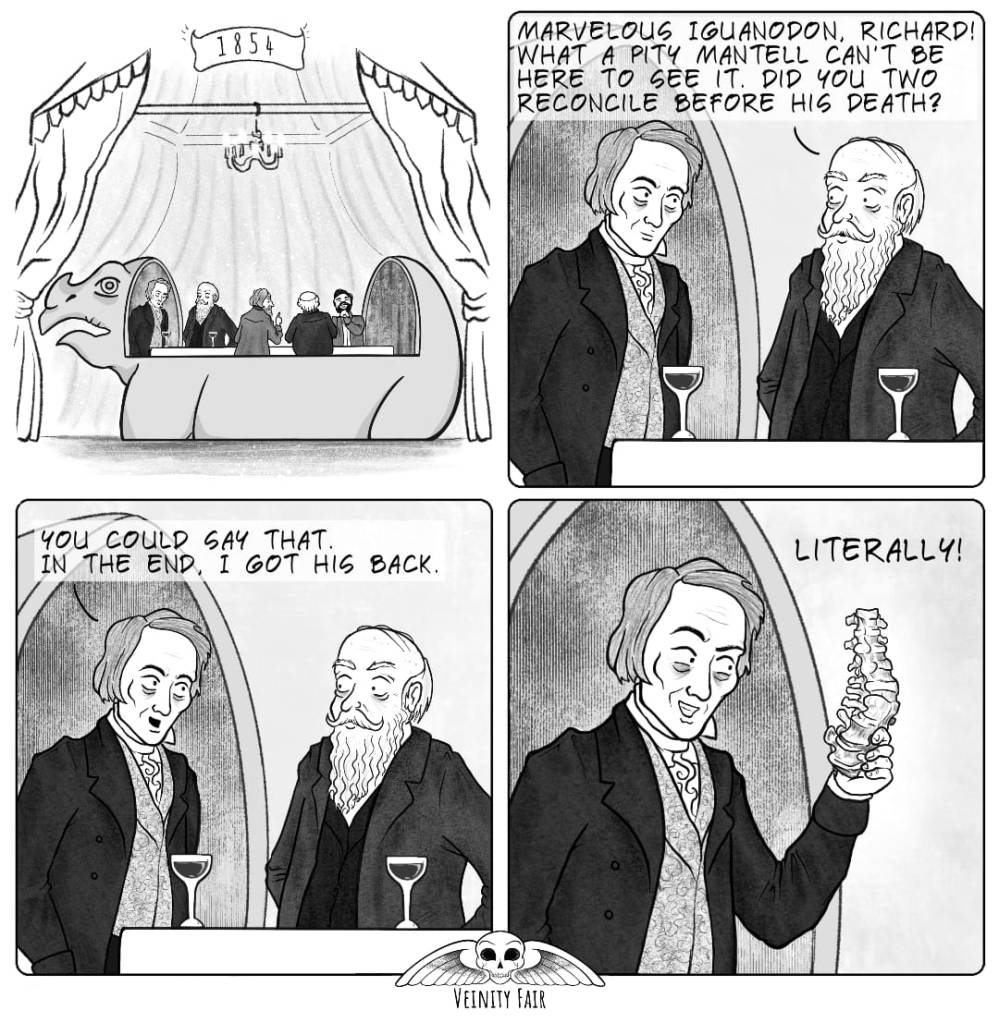
 What did you do for New Year’s Eve? Maybe you spent the night at a fancy dinner party inside a giant concrete Iguanodon, surrounded by prominent scientists? That’s exactly what Richard Owen, a paleontologist famous for coining the word Dinosauria, did on 31 December 1853. The party took place at The Crystal Palace at Sydenham, and the Iguanodon was a part of a larger exhibition of dinosaur models sculpted by Benjamin Waterhouse Hawkins under Owen’s scientific direction. The lavish dinner consisted of eight courses and the whole event was reportedly quite boisterous.

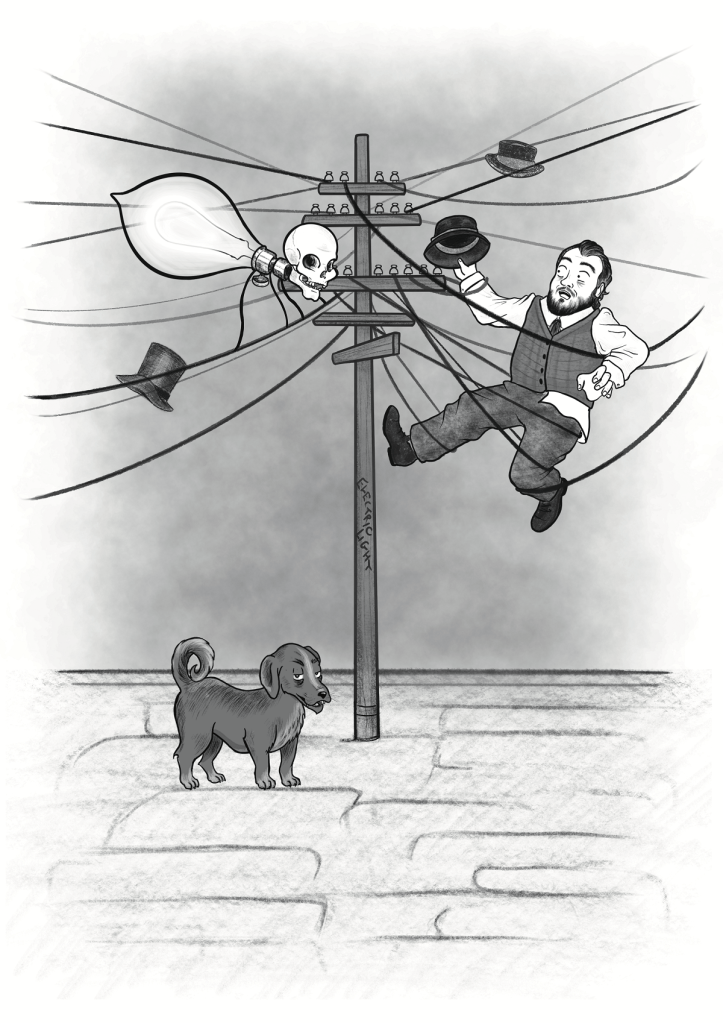
 The articles were aimed at George Westinghouse’s company, the use of high-voltage alternating current (AC), and the electrical wires taking over the city like a giant spider’s web. As we know, the war against Westinghouse and AC was mainly fueled by his rival, Thomas Edison, whose official aim was to protect the people’s lives, but in reality also to promote his electrical system and ruin competition.
 A heated debate over the regulation of the electric industry ensued, along with several weeks of complete darkness in New York as the overhead AC lines were cut down.
 veinityfair.com