Victorian spiritualism: séances and automatic writing

Spiritualism

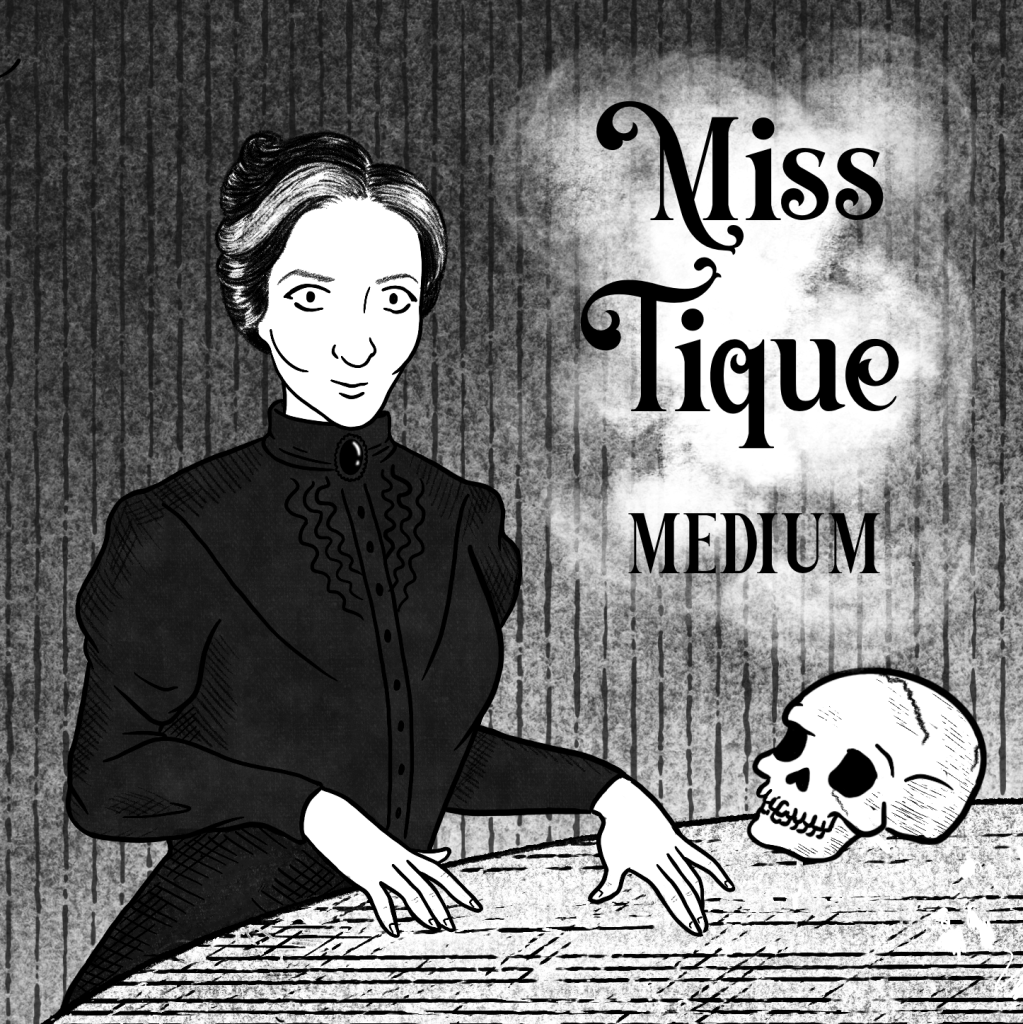
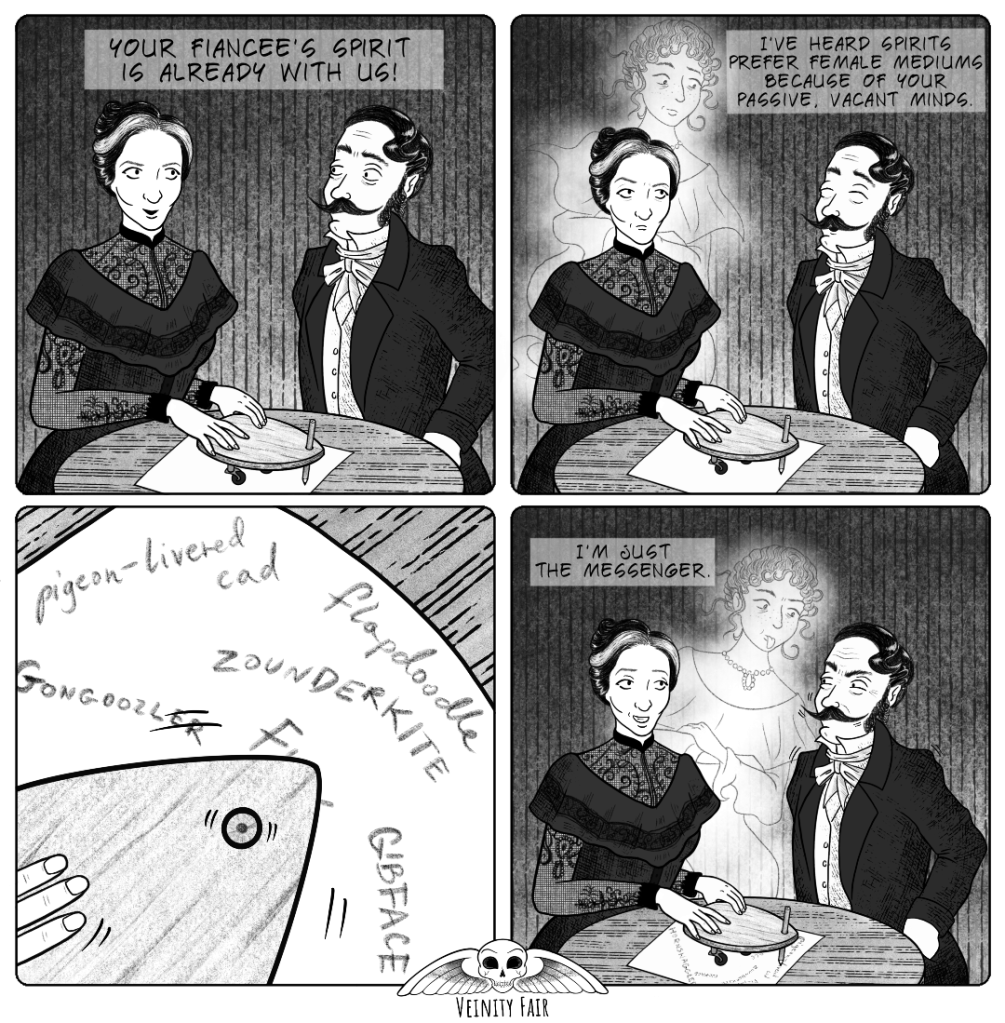
Another séance with Miss Tique, aka @coven_of_skulls ! 👻

We already know about spirit rapping and how tedious it could be to spell spirits’ messages this way. That’s when automatic writing came along – a much faster way for mediums to channel spirits and convey their messages. At least in theory, since many of the ‘messages from beyond’ were indecipherable scribbles or confusing drawings, especially when the writing was done by a few inspired people at the séance table at once.

Automatic writing could be done just with a regular pen, or with the help of a big stylish planchette with little wheels and a hole to put a pen in. The planchette itself was created during an alphabet-calling session in Paris in 1853. As reported by Allan Kardec, one of the participants of a séance that day channeled the spirits who told them to grab a basket, put it upside down, and put a pencil in it. ✏️👻

As for Miss Tique’s rude guest, it was actually a belief at the time that women made better mediums because they were passive and their minds were ‘vacant,’ thus they could be more easily possessed by spirits. This sexist belief was however embraced and used by female spiritualists in surprising ways, which we’ll explore in future episodes. 💪

Get ready for Miss Tique!

Spiritualism

Happy Halloween, fellow Victorian ghouls!

Since we’re welcoming all the spirits from behind the veil tonight, let’s also welcome Miss Tique, the medium who will introduce us to some techniques and tricks used by different people at the height of the spiritualism movement when beliefs often met with showbusiness. 

Our Miss Tique was inspired by @coven_of_skulls and her love of everything gothic. 

Morbid Souvenirs

Crime

Happy Halloween! 🎃

Veinity Fair is finally back! 👻 I missed you guys and I hope you’re ready for some more Victorian trivia and peculiar comics! 🖤

Let’s start just where we left off, with topics chosen by a few lucky winners of previous contests and auctions. Today’s comic was inspired by the winner of a local charity auction who took on the role of our early Victorian investigator. 🕵️‍♂️

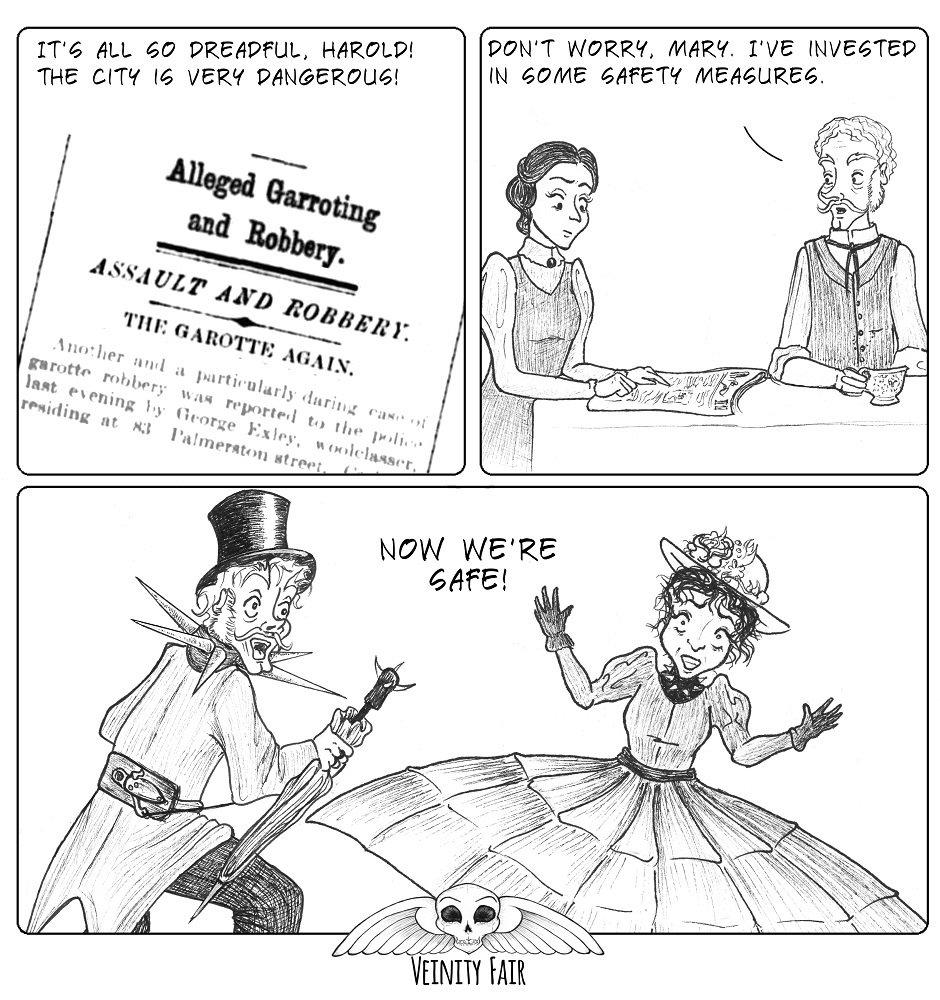
The famous Scotland Yard was formed in 1829, but the Metropolitan Police was far from organized in its infancy. In the beginning, the MP was merely keeping watch on the streets and investigation procedures were just being formed, relying primarily on the so-called “story model” rather than the meticulous practices we’re used to today. Because of that, even crime scenes were often left unattended, with curious crowds peeking in and collecting ‘souvenirs’, as in the below example:

The Examiner 11.12.1831

THE DISEASED APPETITE FOR HORRORS,

“The landlord upon whose premises a murder is committed, is nowadays a made man. The place becomes a show—the neighbourhood as the scene of a fair, The barn in which Maria Martin was murdered by Corder, was sold in toothpicks: the hedge through which the body of Mr. Weare was dragged, was purchased by the inch. Bishop’s house bids fait to go off in tobacco-stoppers and snuffboxes; and the well will be drained—if one lady has not already finished it at a draught —at the rate of a guinea a quart. (…)”

Shopping for Arsenic

Everyday Life, Medicine

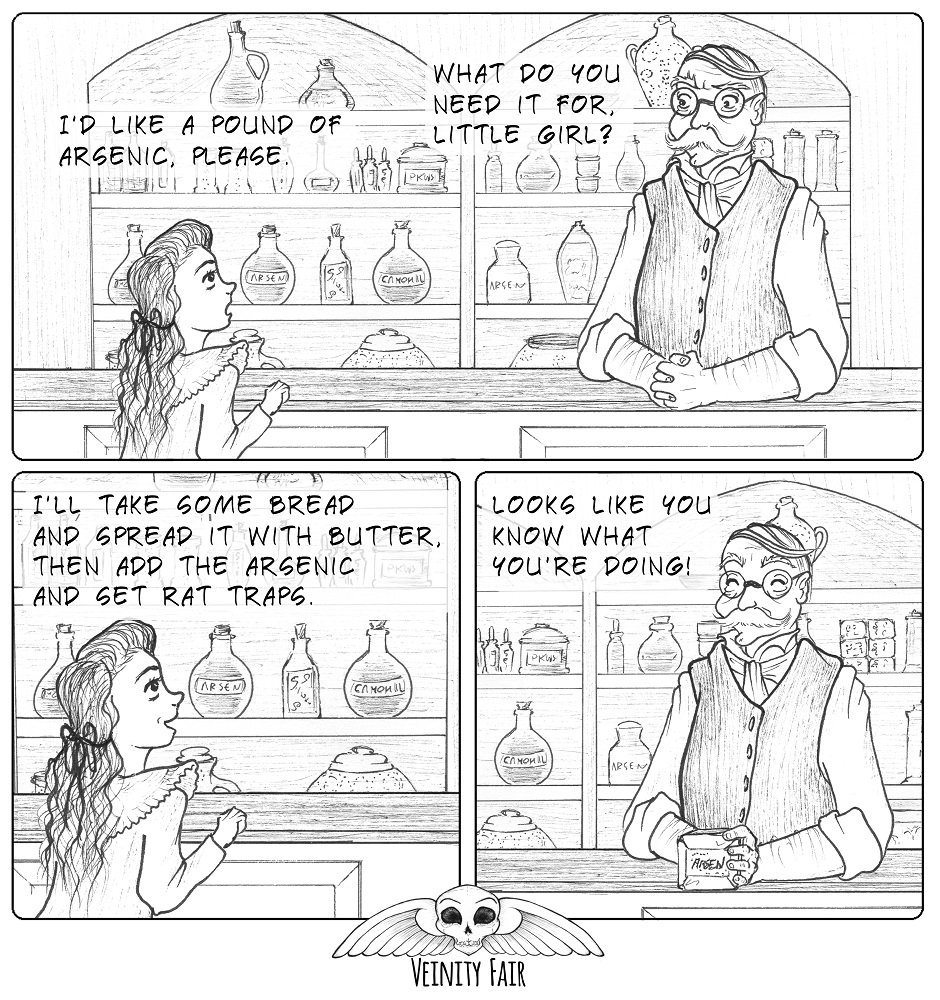
There were no regulations on buying and selling arsenic until 1851, and even then it could be relatively easy purchased by anyone who didn’t cause any suspicion. 

You can read more on arsenic and other poisons in The Secret Poisoner: The Victorian Age of Poisoning.

The Bell

Funerals, Medicine

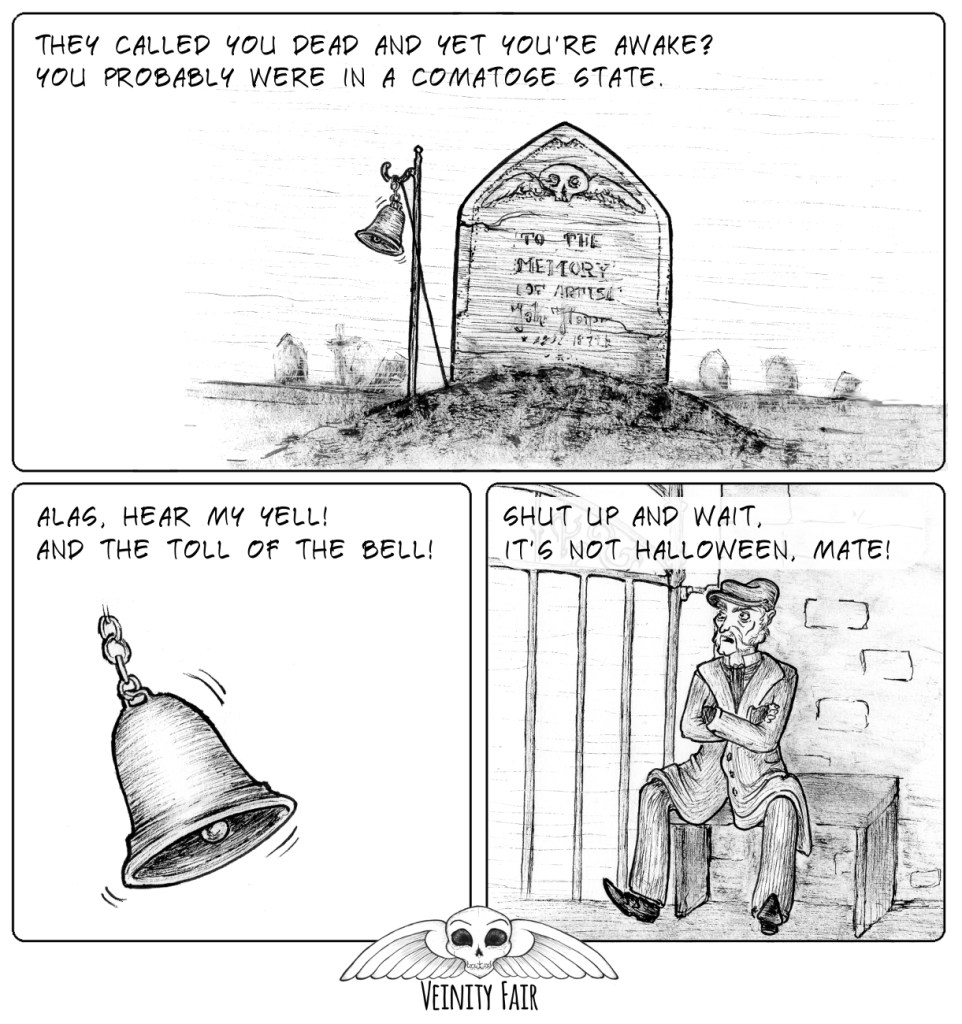
Safety coffins designs were mostly created during the 18th and 19th centuries, when the fear of being buried alive was quite common, due to numerous epidemics and popular fiction.

This week’s comic was inspired by the first episode of Lore, “They Made a Tonic.”