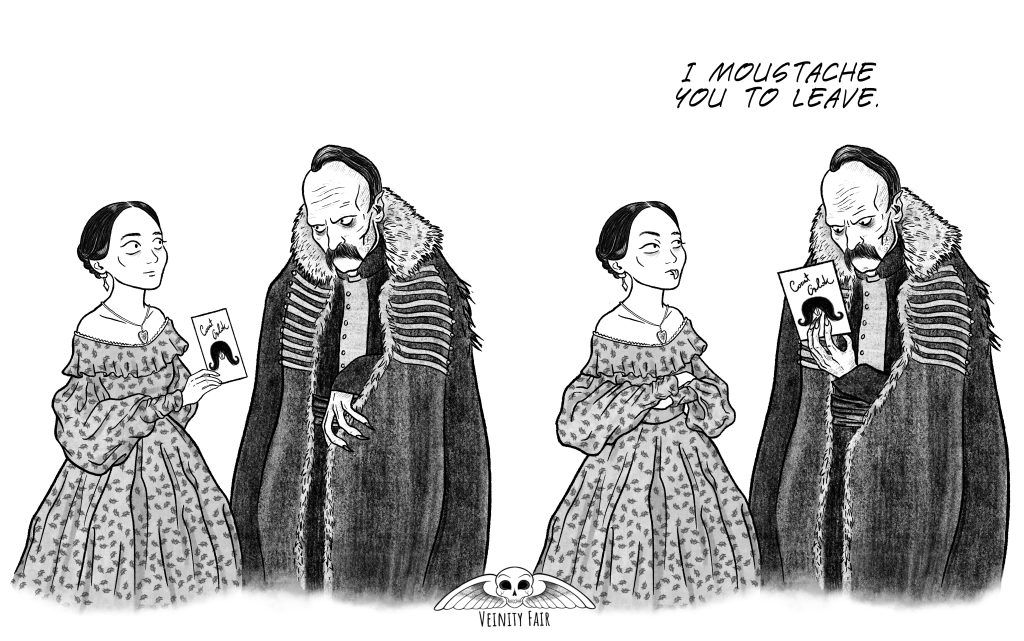
While the Victorians loved sending cute lace-trimmed cards on Valentine’s Day, they didn’t shy away from sending other types of cards to people they wanted to fend off or play a joke on. In such cases, they would send what was known as “vinegar valentines,” which often contained mean poems or caricatures.
One of such cards read:
“To My Valentine ‘Tis a lemon that I hand you and bid you now ‘skidoo,’ Because I love another—there is no chance for you.”
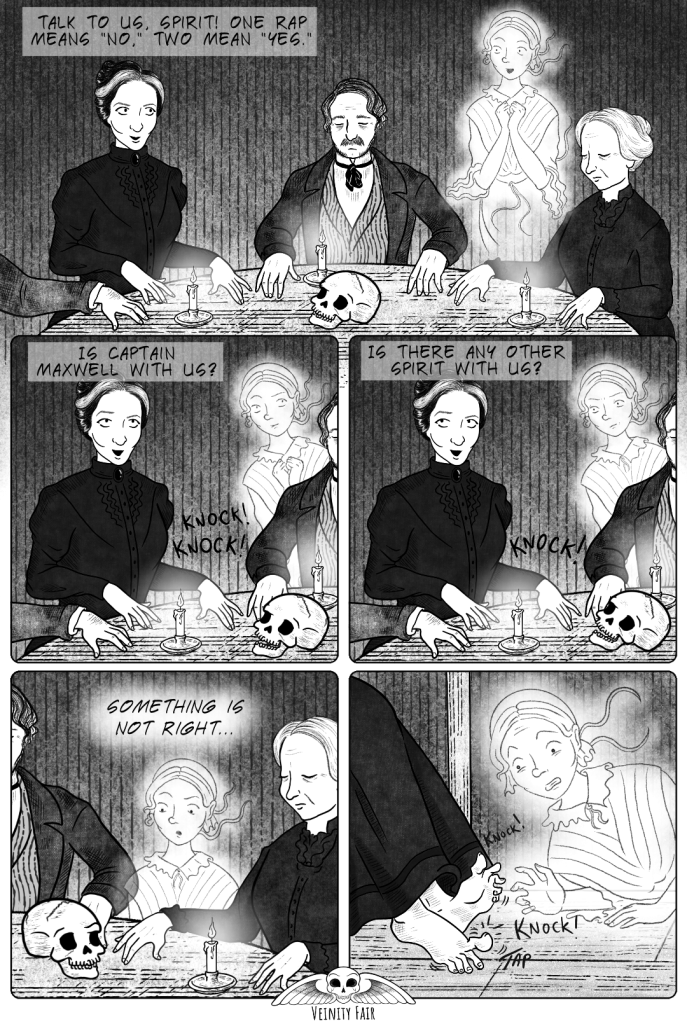
It’s time for the first séance with Miss Tique, aka @coven_of_skulls!
Spiritualism was a movement revolving around the belief that it was possible to communicate with the spirits of the dead, especially via séances. Many ideas that originated in that time regarding séances are still present, e.g., in modern movements interested in the paranormal or popular horror and gothic tropes. While there are a few people who could be credited with starting spiritualism, it hadn’t taken off until 1848 when the famous Fox sisters claimed to contact the spirit of a murdered peddler in their house.
To contact the realm of the dead, the Fox sisters held sessions of ‘spirit rappings’ in which a spirit was supposed to spell out answers to questions by raps, taps, and knocking. It often involved calling out the alphabet, letter by letter, which often took a long time. After a few decades of fame, the sisters revealed themselves to be frauds and admitted they produced the sounds by cracking the joints in their toes.
The New York Herald reported, “There stood a black-robed, sharp-faced widow working her big toe and solemnly declaring that it was in this way she created the excitement that has driven so many persons to su*c*de or insanity. One moment it was ludicrous, the next it was weird.”
While working in Vienna General Hospital in the 1840s, Ignaz Semmelweis noticed a curious thing – the mortality rate of new mothers was a lot higher in wards supervised by doctors 👨⚕️compared to those supervised by midwives 👩⚕️. After some investigating, he found the source of the problem – only doctors had access to both maternity wards and autopsy tables. Semmelweis quickly developed a theory of what he called “cadaverous particles” 🧟♀️🧟♀️ and introduced rigorous handwashing 🧼 in his clinics. Unfortunately, even though his method worked spectacularly well, he was ridiculed by most of the medical professionals until his death in a lunatic asylum. 💀
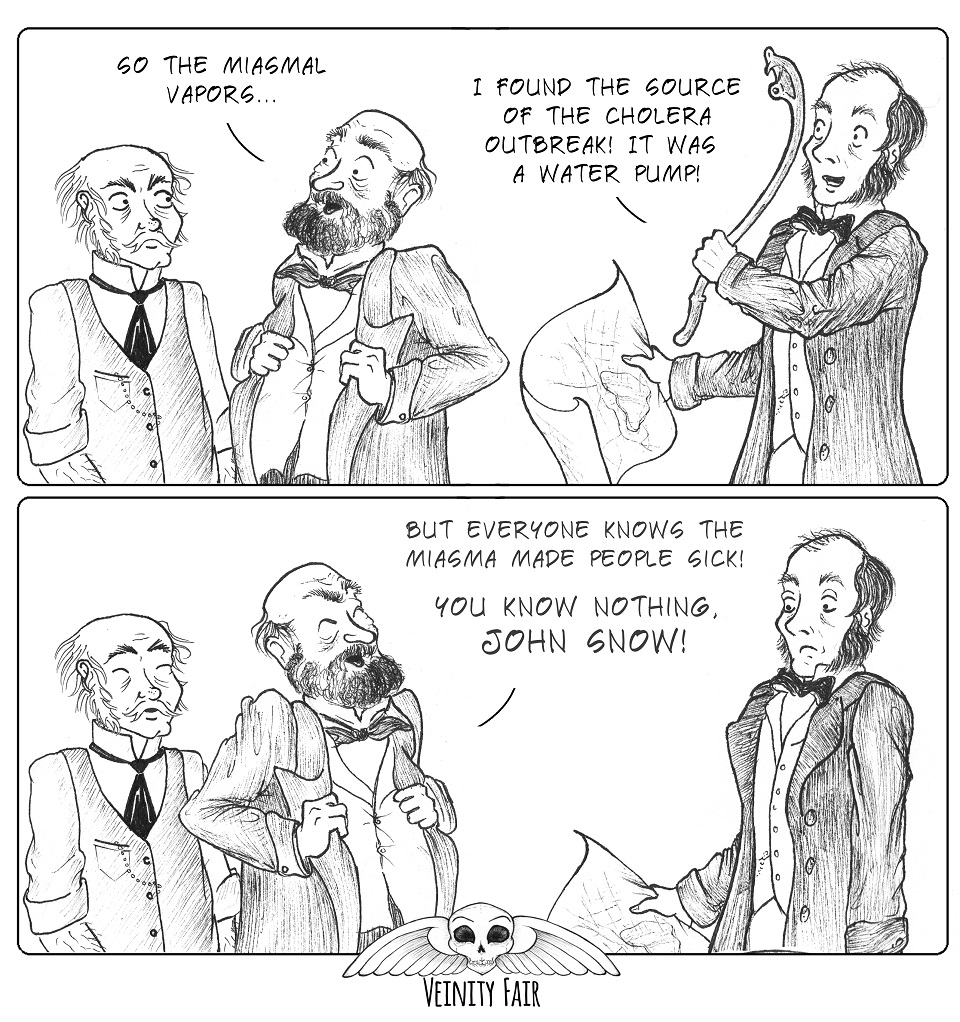
John Snow was an English physician, 👨⚕️ best known for finding the source of a cholera outbreak in Soho,1854. By putting all known cholera cases on a map, he found the source of all troubles – a contaminated water pump. 💦 Why was it such a big deal? This discovery not only led to shutting down the pump, but also worked in favor of the budding germ theory of disease. 🦠🦠🦠 Even though Snow himself didn’t know that at the time, he contributed to the birth of epidemiology. 🔬
The third episode of the newest Victoria season talks about the Snow’s cholera investigation, so check it out! (the series doesn’t always stick well to the facts, though, you’ve been warned) 😀
Erethism, more commonly known as mad hatter disease, 🎩 is caused by mercury poisoning and can cause a variety of symptoms including tremors, timidness, anxiety, and even hallucinations. 🧚♀️It was quite common among hat-makers as they were exposed to mercury used in the manufacturing of felt hats.
Even though the Hatter from Alice’s Adventures in Wonderland 🐛doesn’t display all of these symptoms, his creation might have been inspired by erethism. We know that Lewis Carroll’s uncle, Robert Wilfred Skeffington Lutwidge, was a Lunacy Commissioner supervising Pauper Lunatic Asylums. To keep patients busy, these asylums often organized group activities such as … tea parties. 🧐☕️
The Edwardian Era brought a new craze in plastic surgery – paraffin wax injections.🕯 The promise of a perfect nose👃or chin quickly faded, when it turned out that wax could wander beneath the skin causing infections, blood clots, and even cancer. ☠️
For reference, I learned about upper class women fixing their wax noses in a great BBC documentary series Blood and Guts (there’s also a book available)
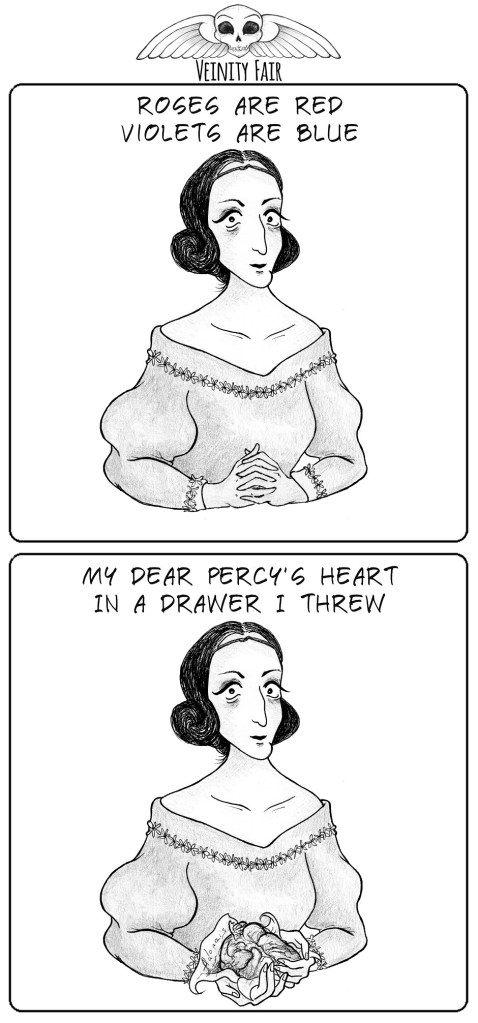
After her husband’s death, Mary Shelley kept his calcified heart 💛 in a desk drawer. And even though some modern scholars believe it was just his liver, Mary herself was convinced that she had Percy’s heart. Quite a suitable keepsake for the author of Frankenstein! 🧟♂️
Laudanum 😴, lead 🤪, alcohol 🥂… all your tips under the last post were great! And yet, there is something else you might add to your healing arsenal… ☠️
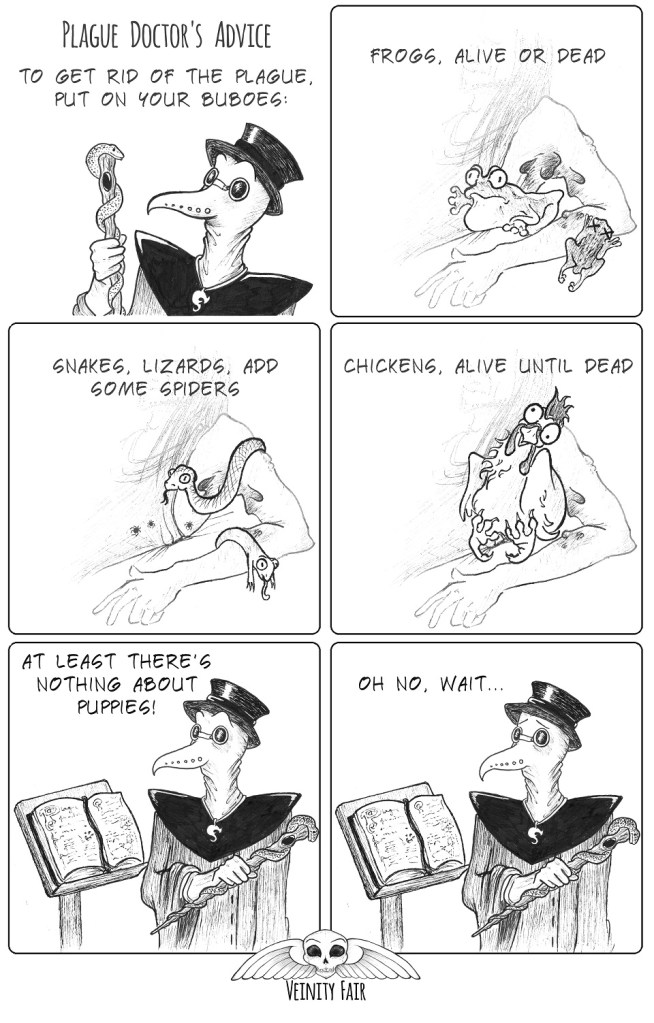
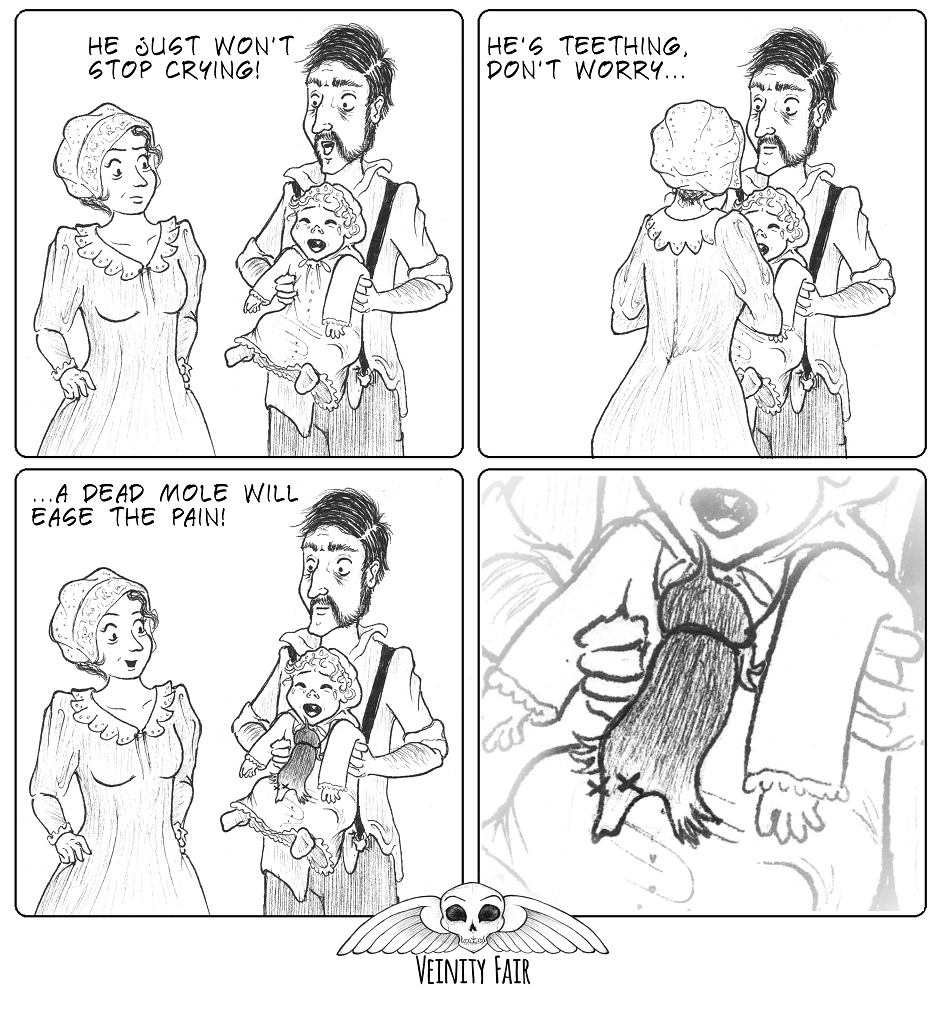
“To ease the pain of teething, hang a dead mole around the neck of your baby.” – find even weirder treatments in this handy booklet: Hints on Health from the Victorians.
The harrowing conditions in match factories, including the use of highly poisonous ☠️ white phosphorus ☠️, were not a secret in the Victorian times. However, It was not until the matchgirls’ strike of 1888 🗣 that the situation started to get better.







 veinityfair.com