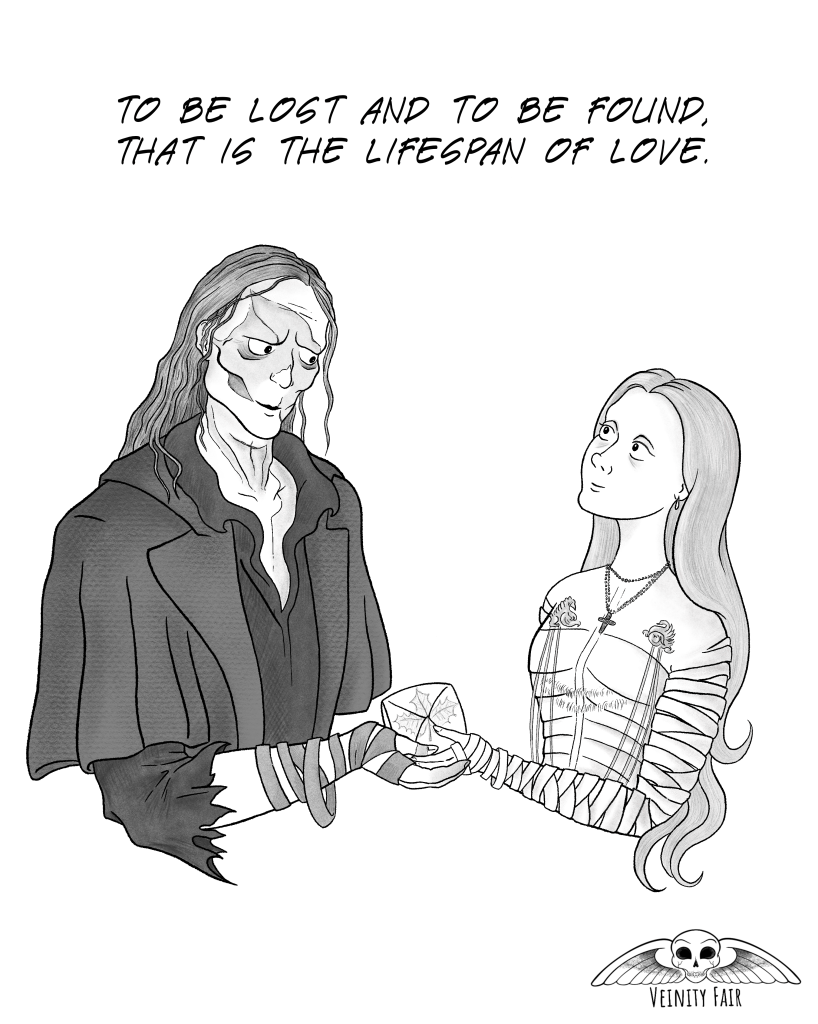
Have you sent any Valentine cards, reels, or gifs yet? Maybe consider a popular Victorian way of sending romantic messages – a puzzle purse. Inspired by the early Japanese art of tatogami, a puzzle purse is a piece of paper folded in such a way as to create a small envelope or box. Inside, one can find a secret message, a picture, or even a small gift.
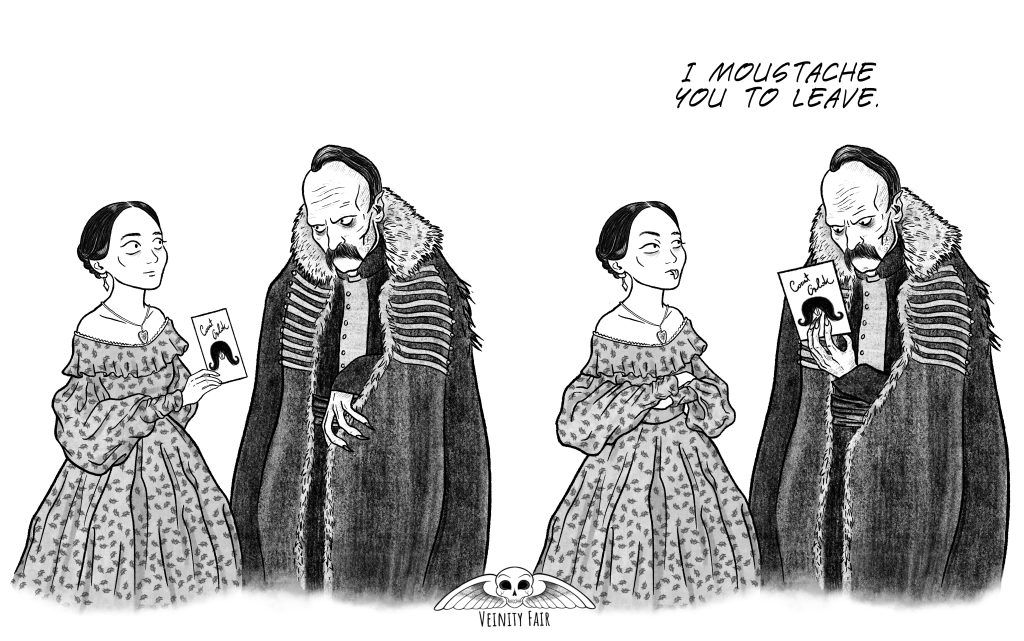
While the Victorians loved sending cute lace-trimmed cards on Valentine’s Day, they didn’t shy away from sending other types of cards to people they wanted to fend off or play a joke on. In such cases, they would send what was known as “vinegar valentines,” which often contained mean poems or caricatures.
One of such cards read:
“To My Valentine ‘Tis a lemon that I hand you and bid you now ‘skidoo,’ Because I love another—there is no chance for you.”
Another séance with Miss Tique, aka @coven_of_skulls !
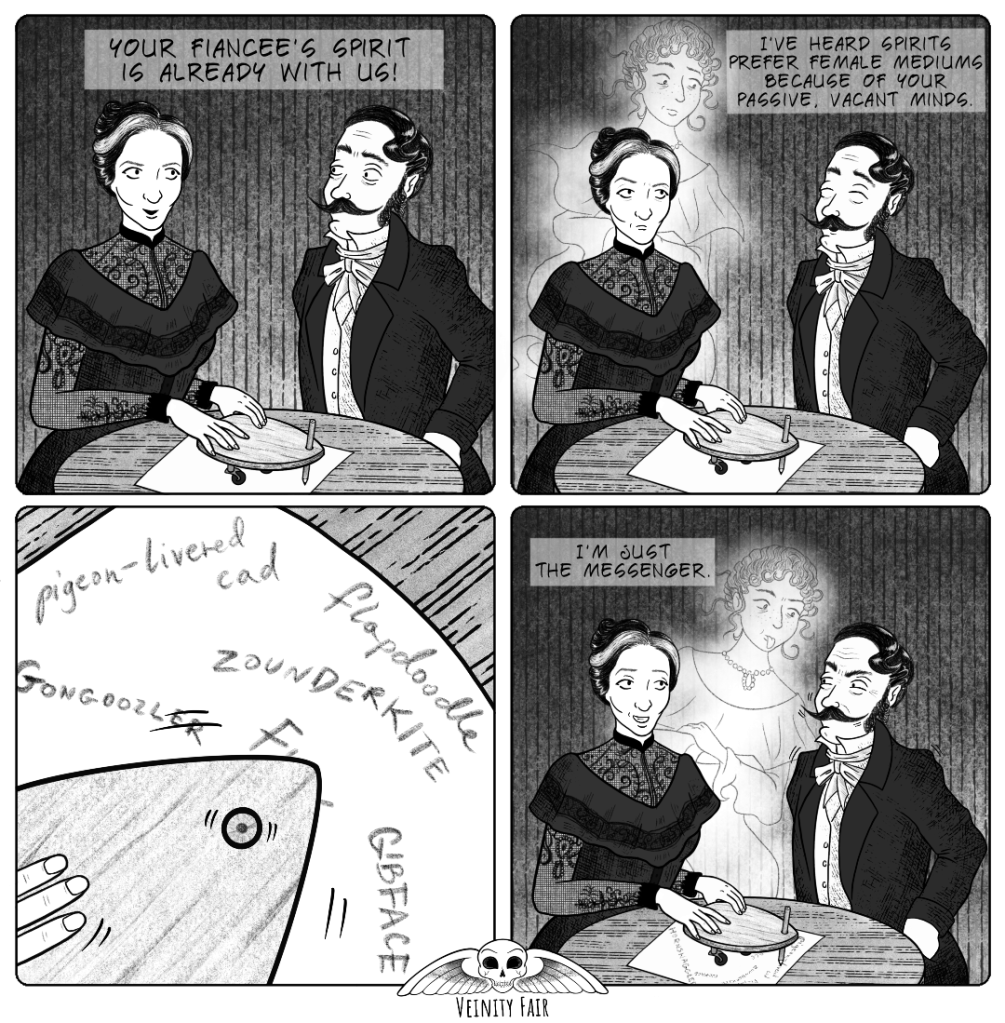
We already know about spirit rapping and how tedious it could be to spell spirits’ messages this way. That’s when automatic writing came along – a much faster way for mediums to channel spirits and convey their messages. At least in theory, since many of the ‘messages from beyond’ were indecipherable scribbles or confusing drawings, especially when the writing was done by a few inspired people at the séance table at once.
Automatic writing could be done just with a regular pen, or with the help of a big stylish planchette with little wheels and a hole to put a pen in. The planchette itself was created during an alphabet-calling session in Paris in 1853. As reported by Allan Kardec, one of the participants of a séance that day channeled the spirits who told them to grab a basket, put it upside down, and put a pencil in it.
As for Miss Tique’s rude guest, it was actually a belief at the time that women made better mediums because they were passive and their minds were ‘vacant,’ thus they could be more easily possessed by spirits. This sexist belief was however embraced and used by female spiritualists in surprising ways, which we’ll explore in future episodes.
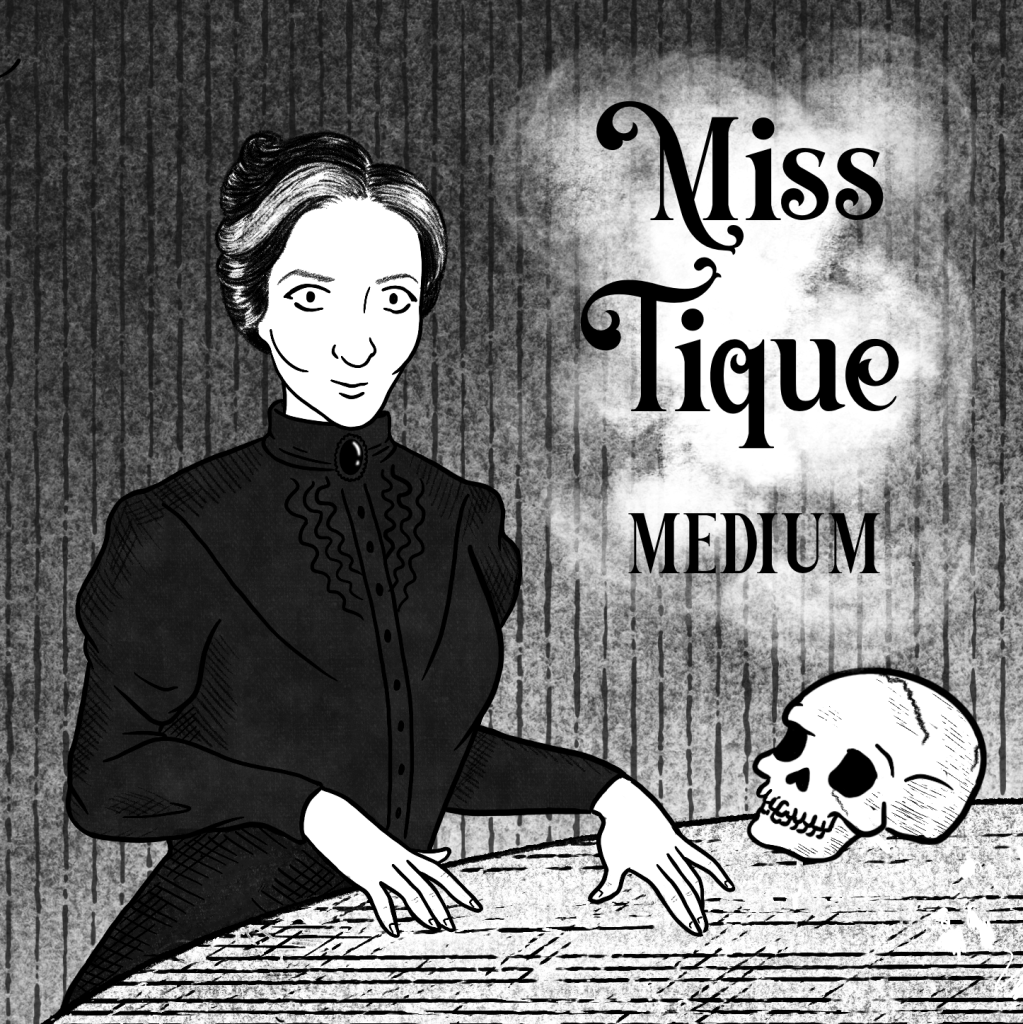
It’s time for the first séance with Miss Tique, aka @coven_of_skulls!
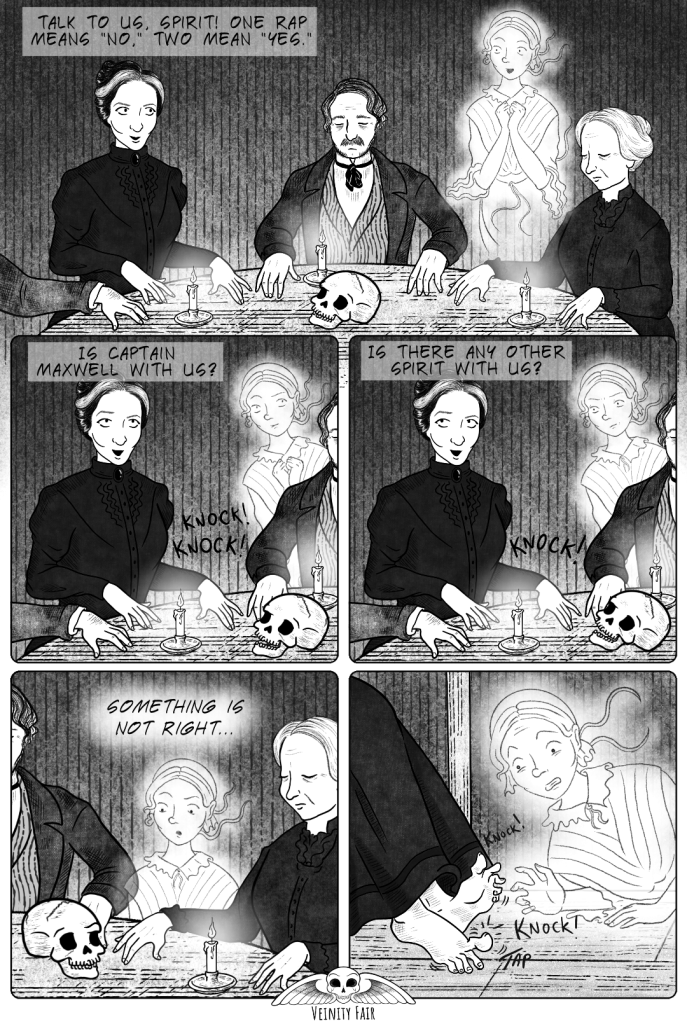
Spiritualism was a movement revolving around the belief that it was possible to communicate with the spirits of the dead, especially via séances. Many ideas that originated in that time regarding séances are still present, e.g., in modern movements interested in the paranormal or popular horror and gothic tropes. While there are a few people who could be credited with starting spiritualism, it hadn’t taken off until 1848 when the famous Fox sisters claimed to contact the spirit of a murdered peddler in their house.
To contact the realm of the dead, the Fox sisters held sessions of ‘spirit rappings’ in which a spirit was supposed to spell out answers to questions by raps, taps, and knocking. It often involved calling out the alphabet, letter by letter, which often took a long time. After a few decades of fame, the sisters revealed themselves to be frauds and admitted they produced the sounds by cracking the joints in their toes.
The New York Herald reported, “There stood a black-robed, sharp-faced widow working her big toe and solemnly declaring that it was in this way she created the excitement that has driven so many persons to su*c*de or insanity. One moment it was ludicrous, the next it was weird.”
Since we’re welcoming all the spirits from behind the veil tonight, let’s also welcome Miss Tique, the medium who will introduce us to some techniques and tricks used by different people at the height of the spiritualism movement when beliefs often met with showbusiness.
Our Miss Tique was inspired by @coven_of_skulls and her love of everything gothic.
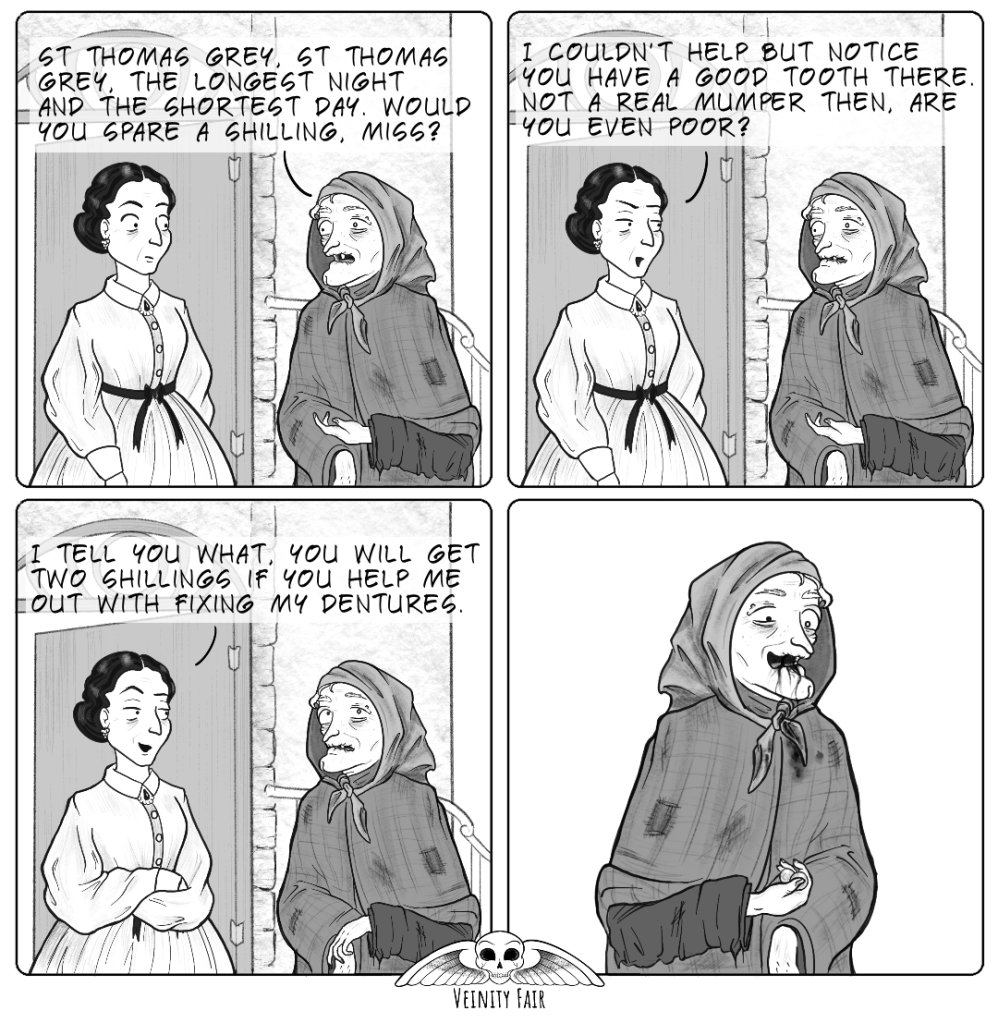
December 21, the winter solstice, is a day on which Victorians would honor St. Thomas by participating in various charitable events, giving food and money to the poor. One of the customs was for poor women to go around the houses asking for alms, which was often referred to as going “a thomasing”, “a gooding”, or “a mumping.” The last term comes from the word mumpers, a name given to toothless beggar women, probably originating from the Dutch mompen = to mumble.
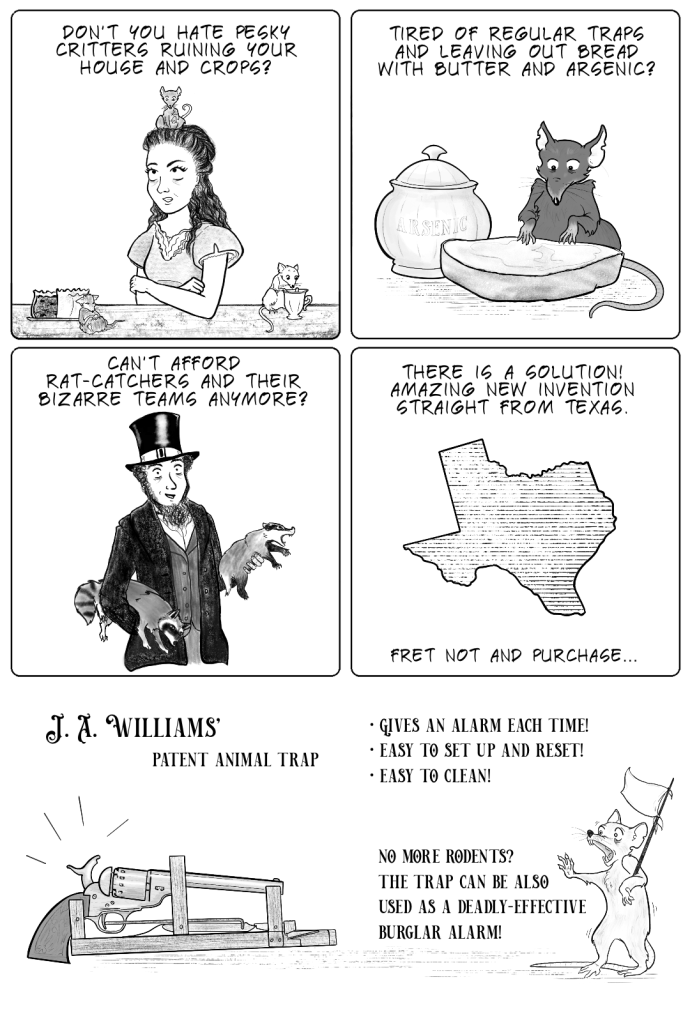
On December 26, 1882, certain James A. Williams was granted a patent for a rather peculiar invention: an animal trap with a spring-loaded firearm. In his patent application, Williams described how the contraption worked:
“[I]t consists in the combination of a suitable frame upon which a revolver or pistol is secured, a treadle which is secured to the front end of this frame, and a suitable spring and levers, by which the firearm is discharged when the animal steps upon the treadle (…) The object of my invention is to provide a means by which animals which burrow in the ground can be destroyed, and which trap will give an alarm each time that it goes off, so that it can be reset.”
Of all the 19th-century ideas on how to deal with pests, this must be one of the most dramatic and over-the-top! The Texan inventor went even further and noted that “[t]his invention may also be used in connection with a door or window, so as to kill any person or thing opening the door or window to which it is attached.”
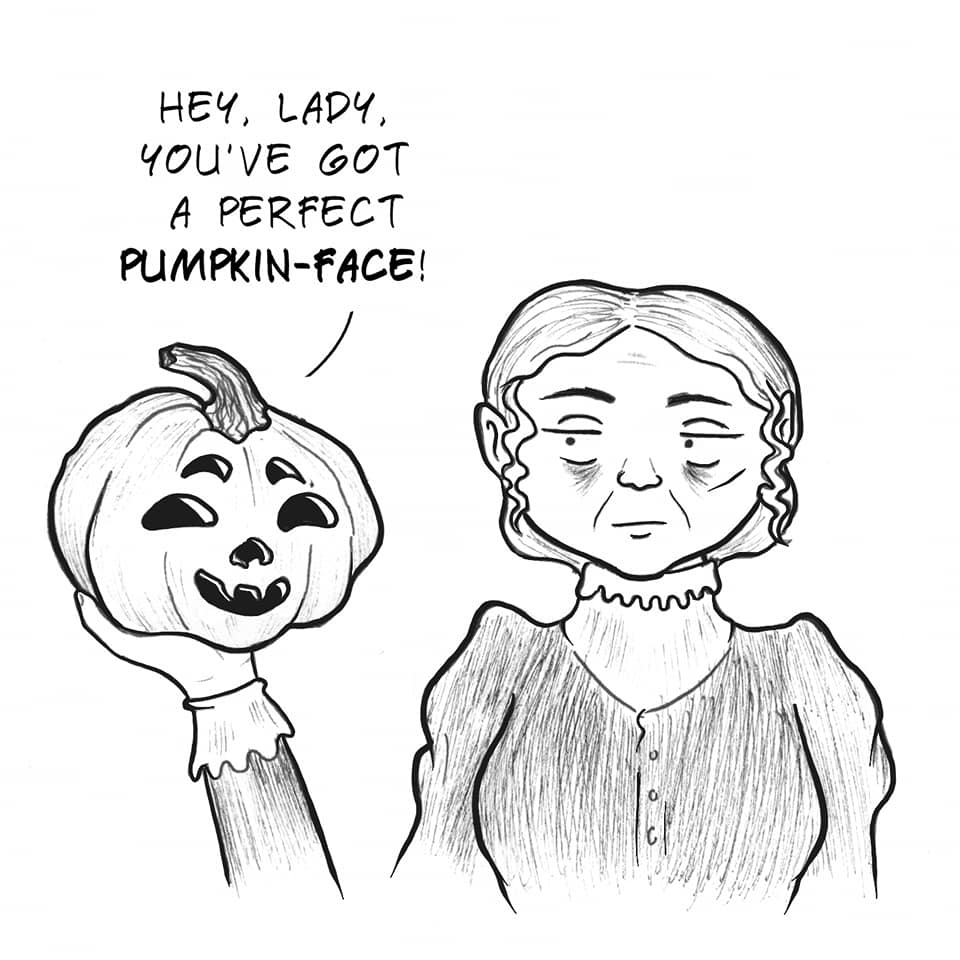
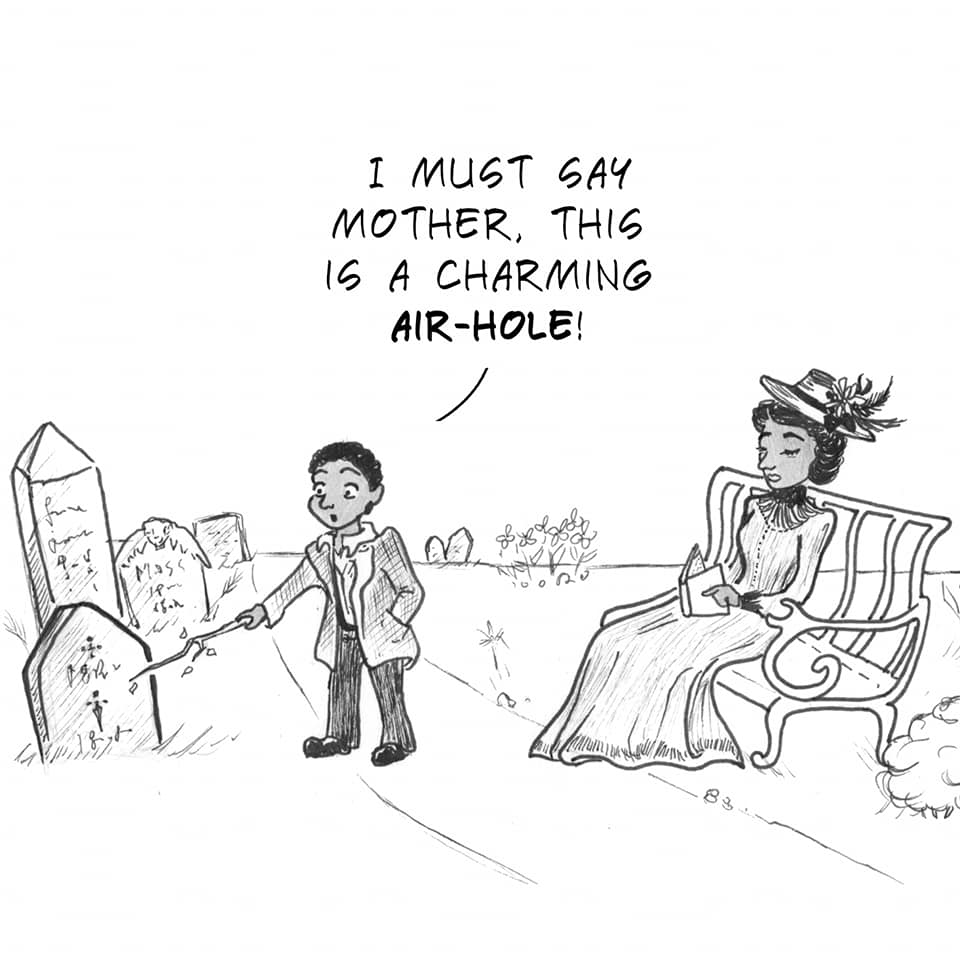
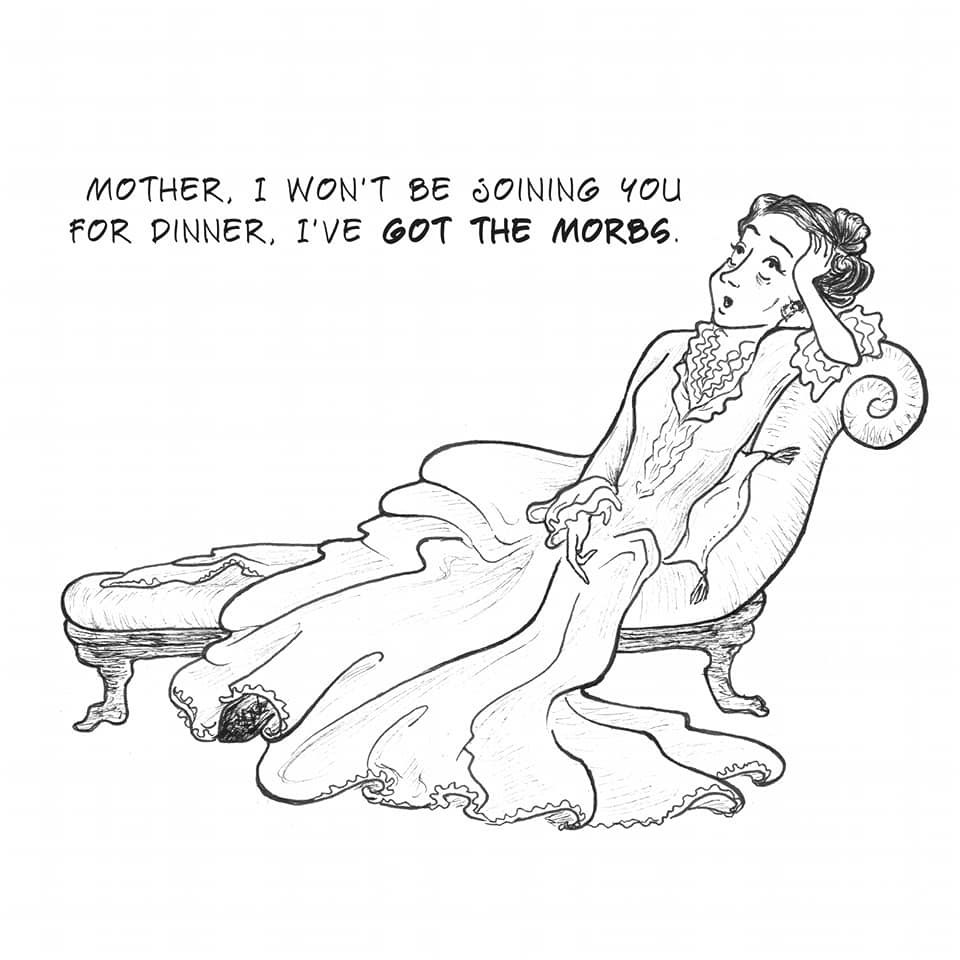
Starting today, I’m going to share with you some interesting and/or amusing phrases taken from The Victorian Dictionary of Slang & Phrase by J. Redding Ware. That is additionally to the regular comics of course! Let’s start with those three and let me know what you think of that format
Pumpkin-face (American) A round face with no expression in it.
Air-hole (Soc., 1885-95) A small public garden, generally a dismally converted graveyard, with the ancient gravestones set up at ‘attention’ against the boundary walls.
Got the morbs (Soc., 1880) Temporary melancholia. Abstract noun coined from adjective morbid. This fantastic phrase starts our biweekly Patreon series illustrating Victorian slang.











 veinityfair.com