Unwrapping Party

Colonialism, Entertainment, Funerals, Medicine

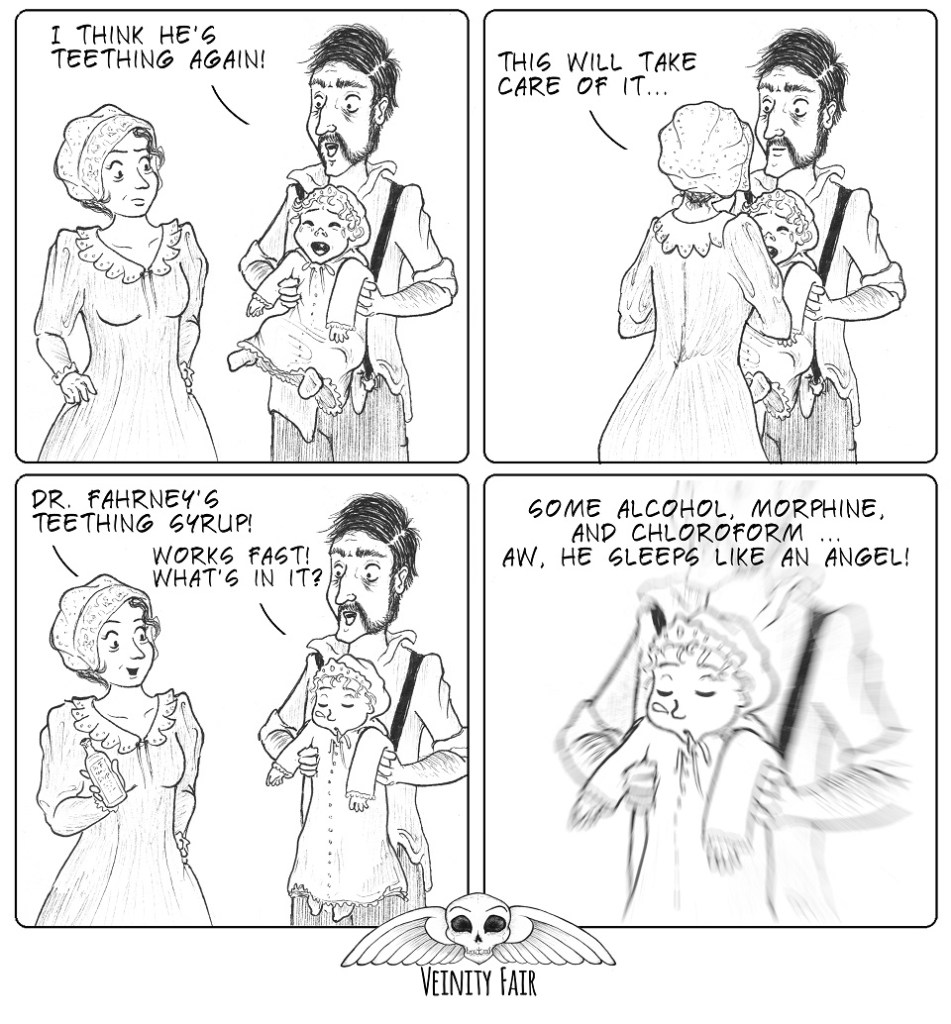
The Egyptomania that took over Europe in the 19th century caused a few disturbing trends in society. One of them were so-called unwrapping parties, during which people would observe or even take part in unwrapping ancient mummies, stealing the valuables they could find, or even dissect what was left of the body for “souvenirs” or magic-like medicine. Such parties were supposedly happening in London.

While some scholars today question whether such parties really happened, we can be quite sure that at least one person – surgeon Thomas Pettigrew – was fond of such gatherings, turning them into bizarre shows.

Remember to check out Caitlin Doughty’s video on this topic: https://www.youtube.com/watch?v=pVDo2tsJeXA

Thomas Dent Mütter

Medicine, Surgery

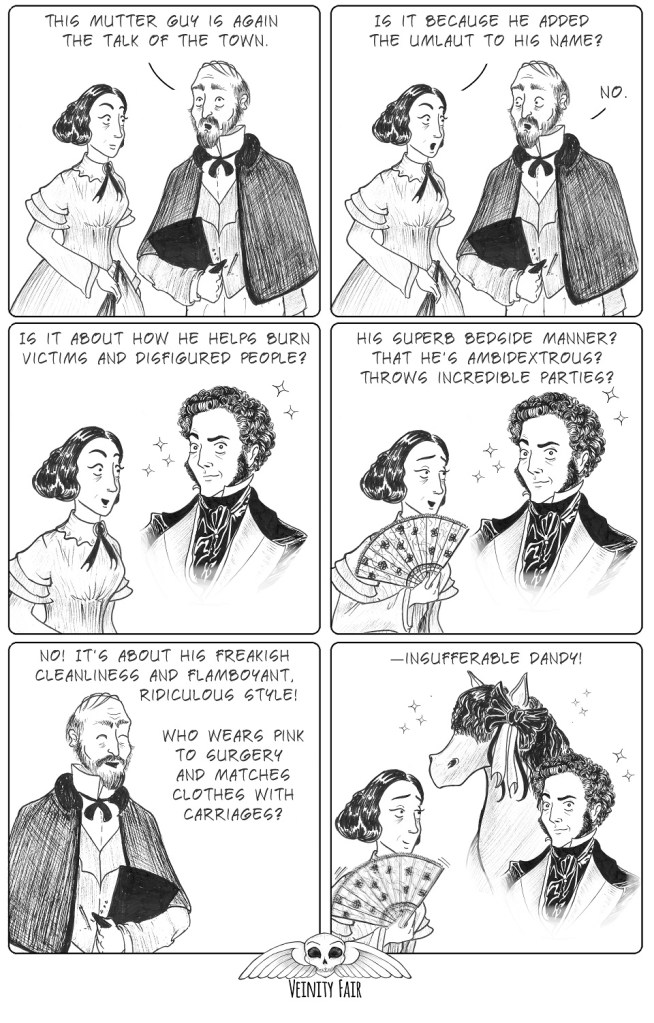
Doctor Thomas Dent Mütter was an exceptional surgeon 💉 who pioneered many techniques that helped burn victims and people with extreme deformities, labeled by others as lost causes and “monsters” (it was a medical term at the time! 😰).

Mütter himself suffered from several illnesses throughout his life, which made him very sympathetic to patients’ lot. He used to explain the procedures to patients and prepare them for surgeries both physically and mentally. He boasted to be one of the fasted surgeons in the U.S., an important feature in the pre-anesthesia times, and wrote a book on special techniques used during such surgeries. This didn’t prevent him from becoming the first surgeon to administer ether anesthesia in Philadelphia and adapt his methods over time according to the newest discoveries.

Mütter was also a colorful figure known for extravagant style and expression, something that Europeans loved about him and many Americans … not so much. Today he’s best known for an enormous collection of medical specimen and oddities you can visit in Philadelphia (I highly recommend it! 💀)

Check out this riveting biography for more outstanding stories from Mütter’s life: https://www.goodreads.com/…/20949450-dr-m-tter-s-marvels

Crape Veils

Everyday Life, Fashion, Funerals

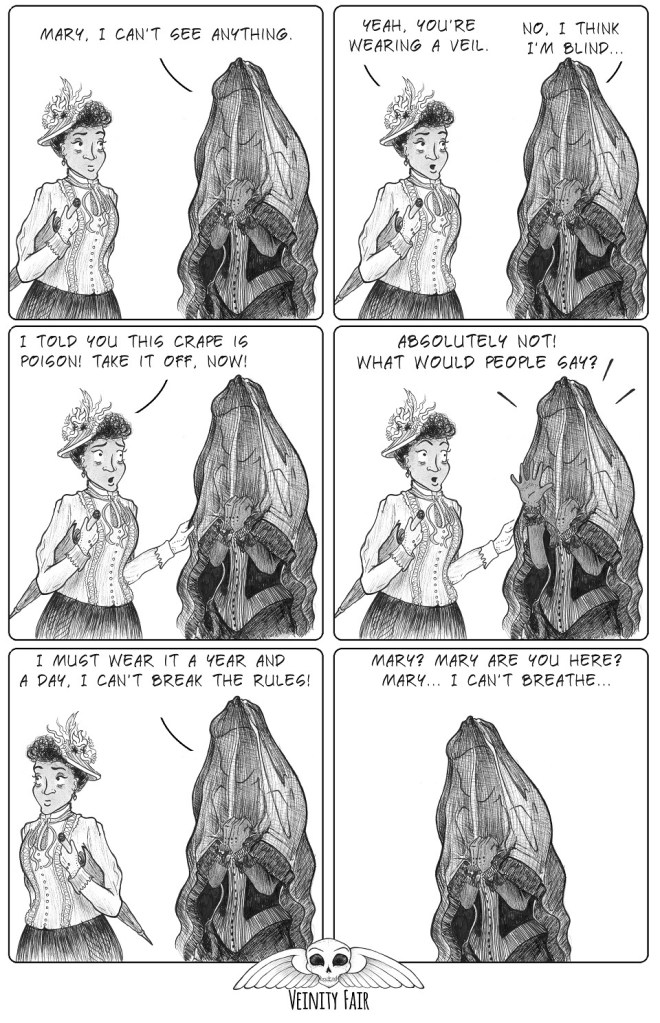
Victorian mourning veils were popular accessories worn by grieving women. ⚰️ The veils could be as long as six feet and were traditionally made out of black crape, a scratchy fabric believed to be the most appropriate for mourning. 🖤

Unfortunately, some of the black dyes (like logwood dye) used in the production were quite poisonous, 🐍 causing a variety of ailments from light rashes to serious respiratory problems. Widows were especially affected by these dangers as the Victorian society expected them to wear crape veils for at least a year and a day during the so-called deep mourning stage.

You can check out an interesting article about Victorian mourning stages and mourning fashion here: https://www.racked.com/…/171…/19th-century-mourning-veil

Trains

Entertainment, Everyday Life

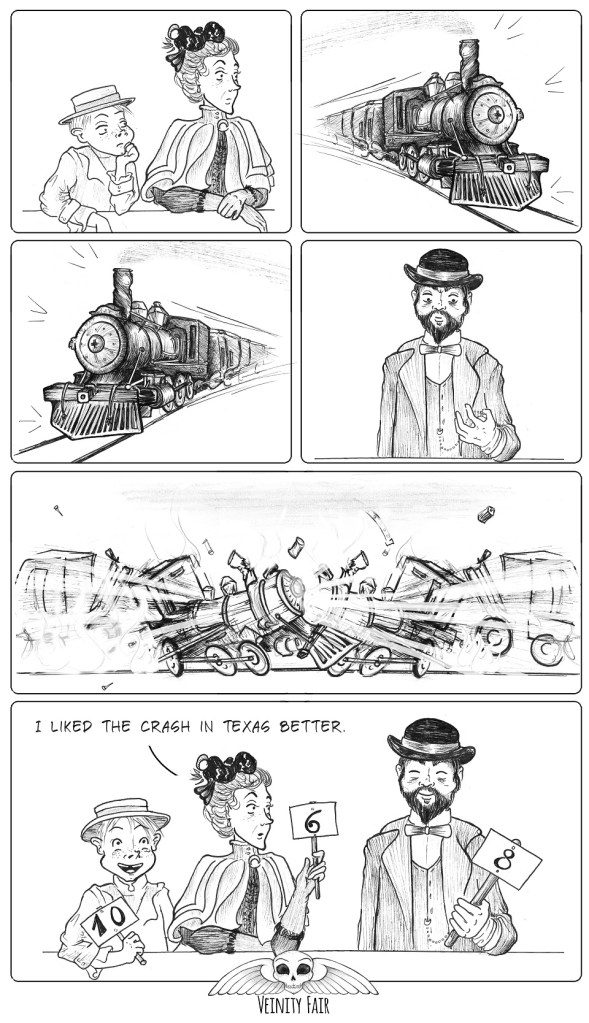
At the turn of the twentieth century, a new form of dangerous and very costly entertainment appeared… staged train crashes 🚂🚂 Thousands of Americans would appear at these events, watching the crashes and collecting “souvenirs” from the wrecks. ⚙️
This craze lasted for almost 40 years!

Check out this story about the most dangerous of these crashes: Atlas Obscura  😎

Crinoline

Everyday Life, Fashion

Crinolines 💃 were hugely popular in the second half of the 19th century, since their fairly light construction allowed women to play with fashion and big dress shapes without the need to carry the weight of several petticoats (as it was done earlier). This vast popularity of crinolines among women of all classes led to coining the word ‘crinolinemania’ and numerous caricatures in the media.

And while there were some hazards 😱 connected with wearing crinolines, especially in factories or near an open fire 🔥, they were definitely great at providing some personal space 😎

Wash Your Hands

Epidemiology, Famous Victorians, Medicine

While working in Vienna General Hospital in the 1840s, Ignaz Semmelweis noticed a curious thing – the mortality rate of new mothers was a lot higher in wards supervised by doctors 👨‍⚕️compared to those supervised by midwives 👩‍⚕️. After some investigating, he found the source of the problem – only doctors had access to both maternity wards and autopsy tables. Semmelweis quickly developed a theory of what he called “cadaverous particles” 🧟‍♀️🧟‍♀️ and introduced rigorous handwashing 🧼 in his clinics. Unfortunately, even though his method worked spectacularly well, he was ridiculed by most of the medical professionals until his death in a lunatic asylum. 💀

Original John Snow

Epidemiology, Famous Victorians, Medicine

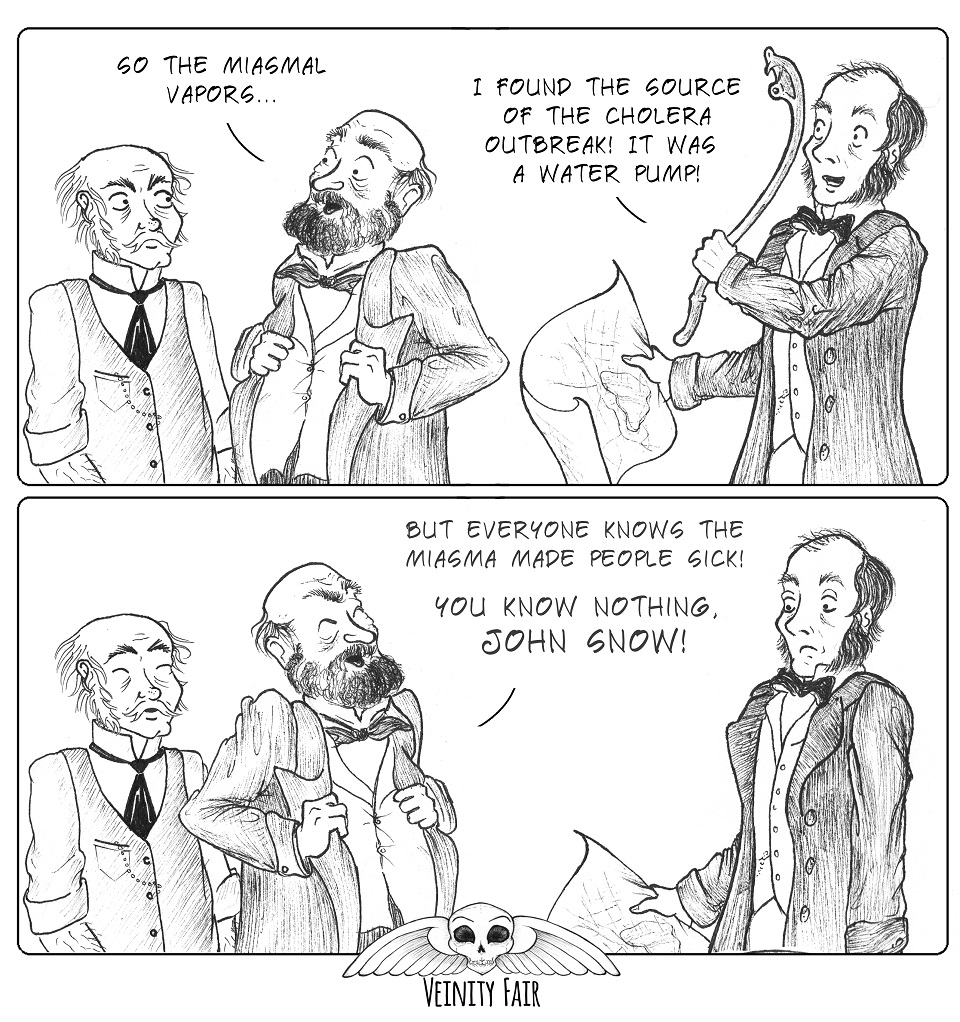
John Snow was an English physician, 👨‍⚕️ best known for finding the source of a cholera outbreak in Soho,1854. By putting all known cholera cases on a map, he found the source of all troubles – a contaminated water pump. 💦 Why was it such a big deal? This discovery not only led to shutting down the pump, but also worked in favor of the budding germ theory of disease. 🦠🦠🦠 Even though Snow himself didn’t know that at the time, he contributed to the birth of epidemiology. 🔬

The third episode of the newest Victoria season talks about the Snow’s cholera investigation, so check it out! (the series doesn’t always stick well to the facts, though, you’ve been warned) 😀

Mad as a Hatter

Everyday Life, Medicine

Erethism, more commonly known as mad hatter disease, 🎩 is caused by mercury poisoning and can cause a variety of symptoms including tremors, timidness, anxiety, and even hallucinations. 🧚‍♀️It was quite common among hat-makers as they were exposed to mercury used in the manufacturing of felt hats.

Even though the Hatter from Alice’s Adventures in Wonderland 🐛doesn’t display all of these symptoms, his creation might have been inspired by erethism. We know that Lewis Carroll’s uncle, Robert Wilfred Skeffington Lutwidge, was a Lunacy Commissioner supervising Pauper Lunatic Asylums. To keep patients busy, these asylums often organized group activities such as … tea parties. 🧐☕️

On a related note, check out this video about the “mad as a hatter” expression 🙂

Wax Noses

Cosmetics, Everyday Life, Medicine

The Edwardian Era brought a new craze in plastic surgery – paraffin wax injections.🕯 The promise of a perfect nose👃or chin quickly faded, when it turned out that wax could wander beneath the skin causing infections, blood clots, and even cancer. ☠️

For reference, I learned about upper class women fixing their wax noses in a great BBC documentary series Blood and Guts (there’s also a book available) 

Mary Shelley

Everyday Life, Famous Victorians, Medicine

After her husband’s death, Mary Shelley kept his calcified heart 💛 in a desk drawer. And even though some modern scholars believe it was just his liver, Mary herself was convinced that she had Percy’s heart. Quite a suitable keepsake for the author of Frankenstein! 🧟‍♂️

Interesting article on the subject: http://assets.press.princeton.edu/chapters/s7985.pdf